
Kofa Wildlife Refuge Near Yuma AZ: Palm Canyon Guide
Last updated: November 4, 2026
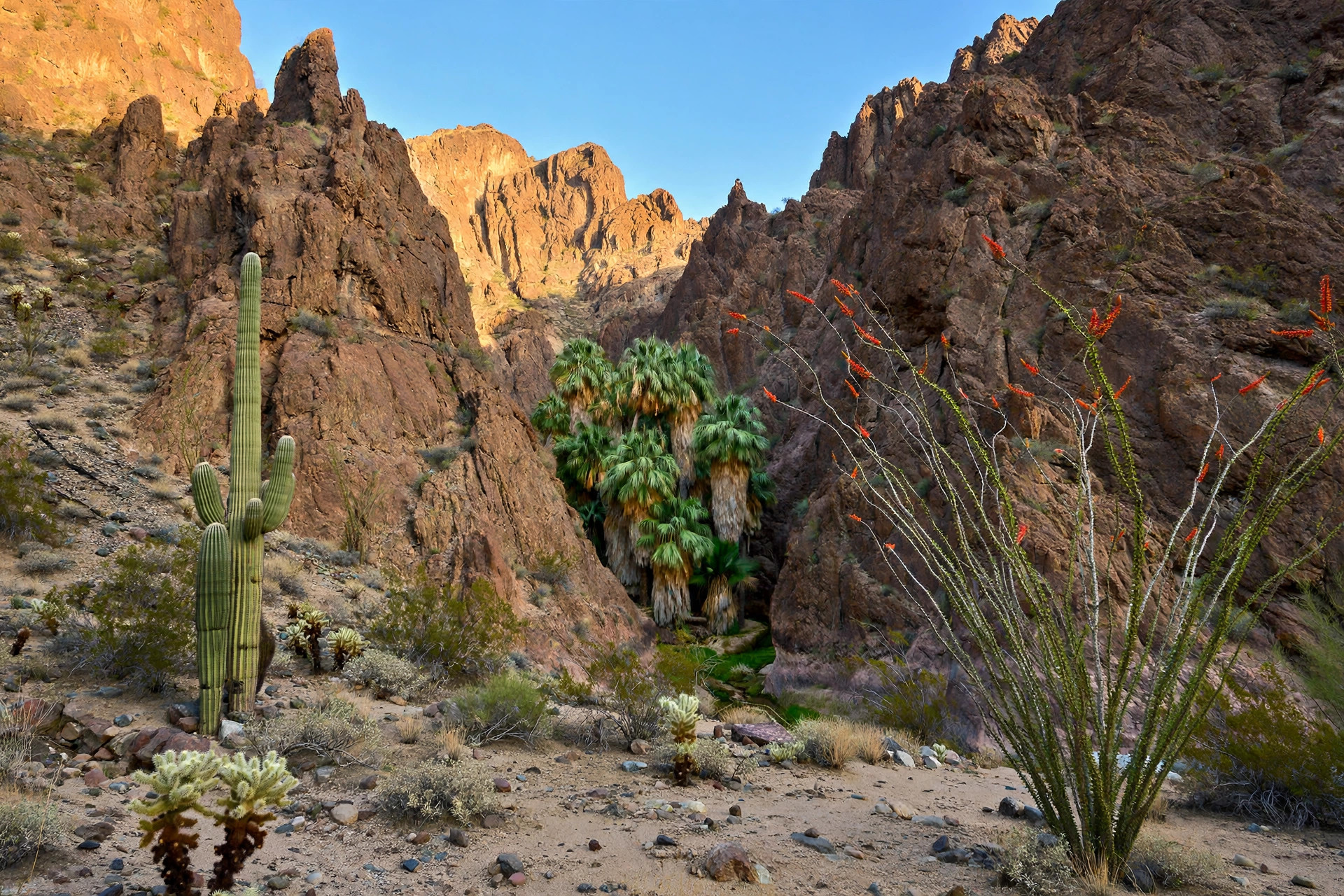
If you live in Yuma AZ and you have never driven out to the Kofa Wildlife Refuge, you are missing the wildest backyard in Yuma County. The Kofa National Wildlife Refuge covers about 665,000 acres northeast of Yuma along Highway 95, and it protects one of the largest desert bighorn sheep herds in Arizona. For new homeowners, winter visitors, and military families settling near MCAS Yuma, this is the place locals point to when someone asks what there is to do outdoors around here.
Where is the Kofa National Wildlife Refuge?
The refuge sits roughly 25 to 40 miles northeast of Yuma, off US Highway 95 on the way toward Quartzsite. The best known entrance is Palm Canyon Road at milepost 85. From there a gravel road runs about eight to nine miles east to the Palm Canyon trailhead. Most cars with decent clearance handle it fine in dry weather. There is no entry fee, no visitor center line, and often no cell service, which is honestly part of the appeal.
What will you see at Palm Canyon?
Palm Canyon is the star of the refuge. A short, rocky trail of about half a mile climbs to an overlook where you can spot California fan palms growing out of a narrow side canyon. These are the only native palm trees in Arizona, fewer than 100 of them, holding on in a shaded crack of rock where moisture collects. Go in the morning when the light hits the palms and bring real hiking shoes, because the trail is loose rock the whole way. Families from neighborhoods like Mesa Del Sol and the Foothills do this hike all winter long, and kids who make the climb tend to talk about it for weeks.
What else can you do in the Kofa?
Beyond Palm Canyon, the refuge is wide open desert. Signal Peak is the big challenge, a steep climb with views that stretch across the whole valley. Dispersed camping is allowed for up to 14 days along roads like Palm Canyon Road and King Road, and winter is prime time for it. Photographers come for the jagged Kofa and Castle Dome peaks at sunset. Birders and wildlife watchers look for bighorn sheep, mule deer, and desert tortoise. About 82 percent of the refuge is designated wilderness, so it stays quiet in a way few places still do.
When is the best time to visit?
November through March is the sweet spot, with mild days made for hiking. October and April work too if you start early. Summer is a different story: temperatures inside the refuge can pass 120 degrees, there is no water anywhere, and rangers and locals alike will tell you to stay out of the canyons midday. Whatever the season, carry at least a gallon of water per person, tell someone where you are going, and fill up on gas in Yuma before you turn off the highway.
Why do Yuma homeowners love having the Kofa nearby?
This is the part that comes up at kitchen tables when people are deciding whether to buy in Yuma AZ. Life here is not just the house. It is Saturday mornings in Palm Canyon, desert camping under huge winter skies, and a refuge bigger than some national parks sitting a short drive from east Yuma and the Foothills. Winter visitors who discover the Kofa often end up shopping for a place of their own, and military families at MCAS Yuma find it is the fastest way to feel like this desert is home.
Thinking about putting down roots near trails like these? Book a complimentary consultation with Johanna Suggs, licensed Arizona real estate agent with eXp Realty and the Rise Up Team. We will talk neighborhoods, prices, and the Yuma lifestyle together, with no pressure and no obligation.
Sources: